頂
底
首頁
Book Chapters
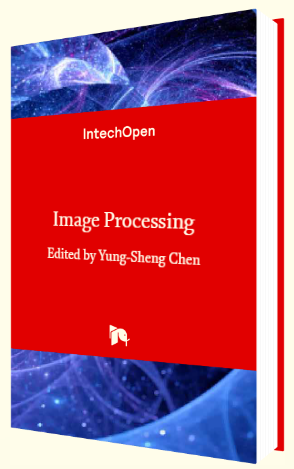
Chen Y.S., Image Processing, Invited Editor, ISBN 978-953-307-026-1, In-Tech, 27 chapters, 516 pages, 2009.
- Chen Y.S., Hsu Y.C., A Simple Baseline Correction Method for Raman Spectra, IAENG Transactions on Engineering Sciences - Special Issue for the International Association of Engineers Conferences 2019 (Edited By: Sio-Iong Ao, Haeng Kon Kim, Oscar Castillo, Alan Hoi-shou Chan and Hideki Katagiri), World Scientific Publishing Co Pte Ltd, pp. 21-32, 2020.
- Chen Y.S., Hsu Y.C., Approach to the segmentation of buttons from an elevator inside door image, Transactions on Engineering Technologies - IMECS 2018 (Eds. by Sio-Iong Ao, Haeng Kon Kim, Oscar Castillo, Alan Hoi-shou Chan, Hideki Katagiri), Springer Nature Singapore Pte Ltd., 105-118, 2020.
- Chen Y.S., Li L.Y., Zhou C.Y., Color blindness image segmentation using rho-theta space, Transactions on Engineering Technologies - IMECS 2017 (Eds. by Sio-Iong Ao, Haeng Kon Kim, Oscar Castillo, Alan Hoi-shou Chan, Hideki Katagiri), Springer Nature Singapore Pte Ltd., 265-280, 2018.
- Chen Y.S., Chang I.C., Chen B.T., Huang C.L., Three-dimensional digital colour camera, Image Processing (Edited by Yung-Sheng Chen), ISBN 978-953-307-026-1, In-Tech, Chapter 14, 245-258, 2009.
- Chen Y.S., Yeh C.K., Automatic lesion detection in ultrasonic images, Image Processing (Edited by Yung-Sheng Chen), ISBN 978-953-307-026-1, In-Tech , Chapter 17, 311-322, 2009.
- Chen Y.S., Image Processing, Invited Editor, ISBN 978-953-307-026-1, In-Tech, 27 chapters, 516 pages, 2009.
ABSTRACT:
Computers, imaging produces, electronic circuits, and software engineering have become very popular and common techniques in the modern society. We can find that there are more and more diverse applications of image processing in these technologies. Nowadays, multimedia applications occupy an important position in technology due to Internet development; however, the topics on image processing, which have been studied for near half a century, still remain tons of fundamentals worth in-depth researches. Generally speaking, developing image processing is aimed to meet with either general or specific needs. Specially, algorithm design is treated as the core topic of the image processing, whatever kinds of applications would benefit from good algorithms to achieve their desired goals. Besides, computer-aided diagnoses applied to medical imaging also plays an extremely significant role on the existing health care systems. Neural networks, fuzzy systems, and genetic algorithms are frequently applied to the variety of intelligent analyst applications. Speeding image processing hardware, especially, should take credit for solving problems with execution performance of appliance-based image processing as well.
There are six sections in this book. The first section presents basic image processing techniques, such as image acquisition, storage, retrieval, transformation, filtering, and parallel computing. Then, some applications, such as road sign recognition, air quality monitoring, remote sensed image analysis, and diagnosis of industrial parts are considered. Subsequently, the application of image processing for the special eye examination and a newly three-dimensional digital camera are introduced. On the other hand, the section of medical imaging will show the applications of nuclear imaging, ultrasound imaging, and biology. The section of neural fuzzy presents the topics of image recognition, self-learning, image restoration, as well as evolutionary. The final section will show how to implement the hardware design based on the SoC or FPGA to accelerate image processing.
We sincerely hope this book with plenty of comprehensive topics of image processing development will benefit readers to bring advanced brainstorming to the field of image processing.
- Chen Y.S., Approach to the Chinese seal registration, Advances in Communication Systems and Electrical Engineering (Eds. by Huang, Xu; Chen, Yuh-Shyan; Ao, Sio-Iong), Springer Science+Business Media, Inc., USA, Chapter 36 in Lecture Notes in Electrical Engineering, Vol. 4, 529-542, 2008.
ABSTRACT:
Registration becomes difficult when the concerned pattern, e.g., a Chinese seal pattern, is noisy and rotated. An approach to Chinese seal registration is presented. For a color image, a self-organization feature map algorithm and a simple color filtering process are applied for seal segmentation. Then a contouring analysis is performed on the segmented seal to detect its principal orientation. Finally, the registration is achieved by combining the orientation difference and the center region translation for two seals. Experiments on seals having rotations, heavy noise, and different resolutions confirm the feasibility of the proposed approach.
- Chen Y.S., Hsu W.H., Parallel thinning algorithm for binary digital patterns, Handbook of Pattern Recognition and Computer Vision (Eds. by C.H. Chen, L.F. Pau, P.S.P Wang), World Scientific Publishing Company, Singapore, Chapter 2.7, 457-490, 1993.
ABSTRACT:
To develop a parallel thinning process which has the fewest number of iterations and the least time complexity of an iteration, capably produce the perfect 8-connected thin line including T-junction and prevent excessive erosion, we present a systematic approach which can induce not only 2-subcycle/iteration but also pseudo 1-subcycle/iteration parallel thinning algorithms. When using this novel approach in designing parallel thinning algorithms, the property of dividing an iteration into two subcycles is obtained. The 2-subcycle/iteration parallel algorithm can be easily reduced to the pseudo 1-subcycle/iteration version by a so-called extended local connecting function. Perfect 8-connected skeletons can be always produced by means of a so-called local connecting function and the shape invariant property of a local straight line. In this chapter, we also present the improvements of the proposed algorithm to produce the perfect 8-connected thin line excluding T-junction and to obtain the isotropic skeleton of an L-shaped pattern. Experiments show that the presented algorithms are feasible.
- Chen Y.S., On the study of line-image processings via the computer algorithm and human visual perception, Ph.D. Thesis, National Tsing Hua University, Taiwan, ROC, 1989.
ABSTRACT:
A postulate is made here that an algorithm designed for computer vision can be efficient and effective enough for dealing with a line image under some conditions well pre-defined; but these constraints can probably be removed if the human visual perception and neural networks are involved in design of the process. In this thesis, we study some processings of 2-D line images via computer algorithms, human visual perception as well as neural networks, to explore this postulate.
The computer algorithm explored in this thesis is thinning, which is an important technique to transform thick patterns to thin patterns in order to facilitate extraction of features for further pattern description or recognition. We propose a systematic approach to design 2-subcycle and pseudo 1-subcycle parallel thinning algorithms which can satisfy the fundamental requirements of efficiency and effectiveness. An improvement of the proposed 1-subcycle algorithm is also presented. However, several inherently unavoidable problems appear in the existing thinning algorithms including the ones proposed by us. These problems limit the performance of pattern recognition systems using traditional computers. Following these, we turn our attention to the human brain to find solutions for removal of these limits.
The solutions are found on the research of human visual perception and neural networks. First, an interesting model is built. We can easily segregate the primitive line information from a line image with this model which consists of the parallel and associative operations. These operations are derived from the evidences and findings of the human visual system. Form the viewpoint of psychology, this model can explain the fundamental intuitive property of line continuation in human visual perception. Next, a neural network called MATNET which is derived from the medial axis (MA) of a line image produced from the MATNET has not the property of connectedness, it can be applied to the generalization process of intuitive pattern recognition in human visual perception.
The intuitive pattern recognition is suggested by the perceptual constancy in psychology, which can be explained by a stimulation-response model. The generalization process involved in the model is used to generate all the possible "solutions" stored in the "long-term memory" for intuitive pattern recognition. Finally we present a novel neural network called I-net in this thesis for intuitive pattern recognition. The I-net can tolerate various deformations of a learned pattern such as pattern scalings, rotations, or noisy interferences.
Through our researches mentioned above, we have roughly shown a proof of the postulate. At the end of this thesis, we also give several future works about these topics.
- Chen Y.S., A new thinning algorithm and high speed multiunit processor for image processing, Master Thesis, National Tsing Hua University, Taiwan, ROC, 1985.
ABSTRACT:
In this thesis, a new thinning algorithm and a high speed multiunit processor are proposed and implemented. The new thinning algorithm belongs to the type that performs iterative and parallel processing. It solves the major difficulties that happened in other methods, such as the distortions occurred on crossing lines and the imperfect thinned results due to the 4-connectivity. The experimental results presented in this thesis confirm that this new thinning algorithm is the best of all. The high speed multiunit processor contains a set of 4 identical processing units with a common external control unit and interface. It has been constructed on 5 printed circuit boards by using LS-series TTL. These 4 processing units are driven by control unit to operate simultaneously. The thinning speed of this hardware system is about 600 times faster than that of a 16-bit microcomputer. Because the lookup table contents of this hardware system can easily be changed, it is possible to implement many other algorithms on this hardware system, such as smoothing, contouring, feature extracting, and etc.